The Failure Library: Why Your Dead Molecules Are Worth Billions
The thesis
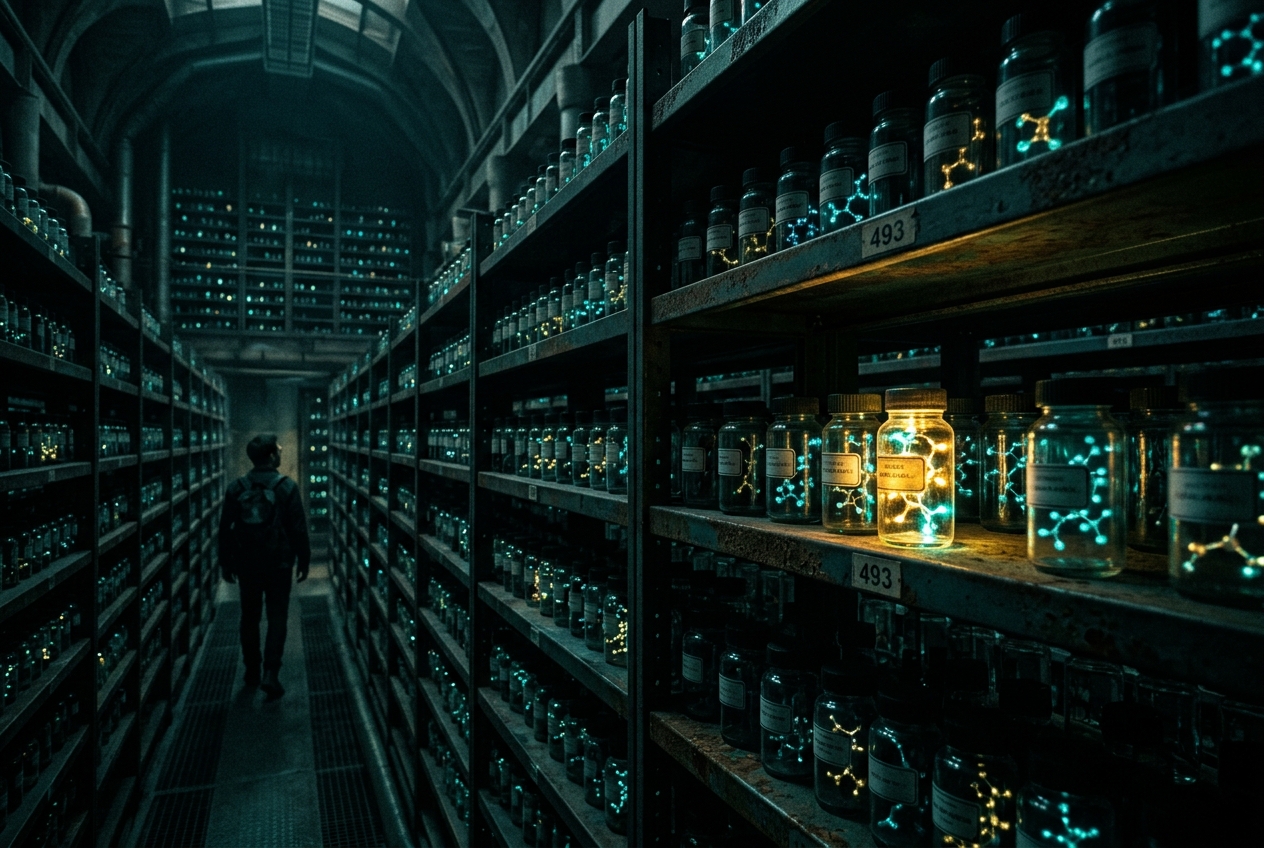
When a program fails, the science is filed under "loss" and forgotten. But a failed molecule is a perfectly labelled negative example — expensive, rigorous, real-world proof of what biology rejects. It is the highest-signal data your company will ever generate, and you are deleting it.
Reframe failure as inventory
Structure every terminated program into a machine-readable record: structure, target, assay, tox finding, PK/PD, the exact reason it died. Do this for twenty years of archives. Now you own a map of the graveyard — the negative space that tells a model where not to go.
What it enables
- Toxicity foresight. Models trained on real failures flag doomed chemotypes at the design stage.
- Repositioning radar. A molecule that failed in oncology for a "side effect" is sometimes a first-in-class drug for another disease — the side effect was the mechanism.
- Portfolio humility. Leadership sees patterns in why they fail, not just that they did.
The cultural fix
Reward scientists for contributing failures, not hiding them. A well-documented failure that saves a future $300M program is worth more than a marginal success.
Provocation
The company that industrialises its own graveyard — and treats "why it died" as a first-class product — will out-discover competitors who keep paying full price to relearn the same lethal lessons.
A first-principles provocation from the Anxya Health Futures desk. Directional and informational — not medical, legal, financial or regulatory advice. The point is to move the debate, then do the hard validation work.